Gerard Minna’s Disappearance
Motherless BrooklynGerard Minna’s disappearance is the unresolved-looking break that becomes a personal act of vengeance: Lionel Essrog gives The Clients Gerard’s concealed location, then later acknowledges that he took Gerard’s life. The event changes more than the direction of the investigation. Its aftermath scatters Gerard’s followers, leaves the Yorkville Zendo under new stewardship, and binds Lionel to both Minna brothers through debts he cannot simply put aside.
Disclosure and the Choice of Vengeance
The disclosure comes in a conversation with The Clients, who ask what information Lionel has that they want. He tells them that Gerard lives on East Eighty-fourth Street, in a zendo under another name, and identifies him as responsible for Frank Minna’s death. When one of them asks what a zendo is, Lionel describes it as a Japanese church. The exchange turns a hidden address and an unfamiliar institution into actionable information: Gerard is not merely missing or difficult to find; Lionel knows where he has been living and connects him directly to Frank’s death.
The Clients respond that the information is of interest to them, but promise to respect Lionel’s wishes. That answer leaves a distinction between their interest in Gerard and Lionel’s decision about what should happen. Lionel does not speak in response. The narration then separates two ideas he knows unequally: guilt is familiar to him, while vengeance is not. He says he will have to think about it. The pause matters because it does not present revenge as an automatic extension of grief; Lionel recognizes it as a choice whose consequences he has not yet accepted.
Disappearance and the Zendo’s Fracture
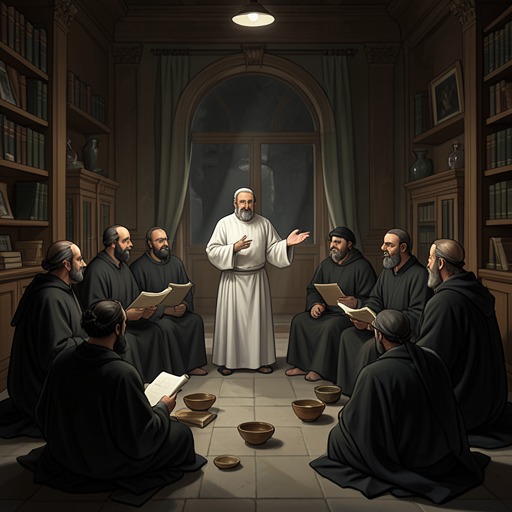
Within a few days of Gerard’s disappearance, most of the Yorkville Zendo’s students have drifted away. A real zendo on the Upper East Side, twenty blocks south, gains members who leave Yorkville in search of what they regard as a truer practice. The movement of students makes Gerard’s absence visible in the institution he had gathered around himself: his departure does not close the zendo at once, but it loosens the congregation and exposes how much its unity depended on him.
The doormen’s earlier role also becomes clearer in retrospect. They had begun as Gerard’s students, described as seekers who were unusually susceptible to his charismatic teaching. That susceptibility made them available for exploitation: first in the Park Avenue building, and later as an inept force of drivers and strong-arms when Gerard needed people to stand alongside Giant Killer. Their passage from spiritual followers to recruited muscle gives the zendo’s apparent religious community a second, compromised function. In contrast, Frank had the Minna Men; Gerard had followers and what Lionel calls Zen stooges. Lionel considers that difference a possible edge in how the case turned out, while admitting that the explanation pleased him to believe.
The Zendo After Gerard
The Yorkville Zendo does not fold. Wallace, its stoic sitter, takes stewardship of the remaining community but declines the title of Roshi. He asks instead to be called sensei, a lesser designation for an apprentice-instructor. The distinction places limits on his authority even as he assumes responsibility for the institution Gerard leaves behind. What survives is not an unchanged congregation but a diminished group with a caretaker who refuses to claim the highest status.
Lionel sees a parallel in the two organizations shaped by the brothers. Frank’s organization and Gerard’s are both gently steered away from corruption by their quietest disciples. That outcome does not undo the harm or bring the powerful parties to account: Fujisaki and The Clients withdraw largely unruffled. The institutional aftermath is therefore uneven. The zendo persists under Wallace, but Gerard’s students disperse; the Minna organizations continue, but the larger forces around them escape lasting consequences. Lionel’s thought that change is difficult to reverse frames the disappearance not as a clean resolution but as a redistribution of people and authority.
Lionel’s Admission and the Event’s Meaning
The fullest confirmation of Lionel’s part comes later, when he looks back on the time he gave himself to considering vengeance. He says he spent five or ten minutes on it, a span he measures as a lifetime in the context of revenge. He had wanted to believe vengeance did not belong to him, neither to his Tourette syndrome nor to his particular self. Yet he describes taking the V train with a cell phone, a number in Jersey, and a handful of names and other words assembled into something more effective than a tic. He also places this action beside a lighthouse in Maine. The account links the choice to concrete means and locations without supplying a full scene of Gerard’s final moments.
Lionel’s eventual admission is stark: although he hardly knew Gerard, he took his life. He places that act beside Frank’s influence on him, saying Frank gave him his life while Gerard’s life was taken by him. The contrast makes the disappearance part of Lionel’s identity rather than merely the end of an investigation. His effort to imagine that he can pretend the journey never happened is immediately undercut by his insistence that it did. Then ordinary work intrudes: a call comes in for a pickup on Hoyt Street to Kennedy Airport, and Lionel volunteers to take it, partly to deny Loomis the satisfaction of an exasperating assignment. The return to L&L routine does not erase the act; it shows how vengeance and daily life occupy the same world for him.